
Lake Oswego Previous Residents by Era
A Lake Oswego address history has several evidence layers. County records tie a parcel to instruments and legal descriptions. Library holdings provide dated local listings, newspapers, and map context. Federal census schedules supply a household snapshot only after their release period. Each source answers a narrower question than “who lived here before,” so retain the title, date, record role, and any gap in the trail.
| Source | Years It Covers | Where Held | What It Shows |
|---|---|---|---|
| Clackamas land records | Ownership traceable in County holdings to the early 1850s; no public remote cutoff verified | Recording public viewing area, microfilm, or computer image | Deeds, parties, legal descriptions, plats, and prior-document references. |
| City and criss-cross directories | Exact Lake Oswego run not confirmed | Lake Oswego Public Library and regional archives | Year-specific name and address leads after the edition and holdings are verified. |
| Federal population census | Released after 72 years; 1950 newest released at the research date | National Archives and authorized access points | Household and residence snapshot for the census date. |
| Lake Oswego permit and planning files | File and department dates vary; no blanket cutoff verified | City Planning or a targeted City request | Construction, alteration, inspection, and project-contact clues. |
| Oswego Sanborn maps | 1927 | City-hosted collection | Period street labels, building footprint, and map context. |
Start with the most recent parcel and transfer evidence, then step into the directory, map, census, and newspaper layers as the date moves backward. Do not claim a web search ends at a particular year, because the County does not publish a verified public online cutoff for the historic deed-name index.
Lake Oswego Previous Residents Parcel Start
For a Lake Oswego address in Clackamas County, begin with CMap to locate the parcel, address form, account or tax-lot identifier, subdivision or plat context, and nearby geometry. CMap accepts an address, city, intersection, tax lot, or parcel number. Its boundary display is not survey quality, and it does not publish owner names online. It is a map and navigation tool, not a complete household record.
Then use AscendWeb with the eight-digit account or street address. City, state, and ZIP can narrow an address search, and the County gives % as a wildcard between number and street name. Individual account pages currently display owner or taxpayer and mailing-address fields, alongside account, situs, map, tax-lot, legal-description shorthand, values, transfer data, sales history, and residential characteristics. Copy the field label with the value. A taxpayer, tax mailing contact, or owner is not automatically a present occupant or the whole household.
Note: A legal description and account number are more durable research keys than a modern street label when an address changes over time.
Lake Oswego Previous Residents Deed Chain
The Clackamas County Clerk, Recording Division is the ownership-history anchor. Take the account, tax lot, or legal description from the parcel work to the public viewing area and ask for the current acquisition instrument. Record the grantor, grantee, recording date, document number, legal description, and any cited earlier instrument. Check the legal description or lot and plat every time, rather than treating two similar street labels as the same property.
- Locate the present parcel and save its address, account or tax lot, and legal-description shorthand.
- Request the latest acquisition document and identify the buyer as the grantee and the seller as the grantor.
- Search the former owner as a grantee to find that person's earlier acquisition of the same legal description.
- Repeat backward through the cited document numbers and each predecessor, noting signed and recorded dates separately.
- Pause when a trust, estate, business entity, or several grantees appear, then use the appropriate probate, court, or business record before attaching a person to the address.
- Grantor
- The party transferring an interest in the recorded instrument.
- Grantee
- The party receiving that interest. Searching an earlier owner as grantee can locate that owner’s acquisition document.
- Chain of title
- The linked sequence of transfers for the same land, checked through legal descriptions, lot numbers, plats, and document references.
- Legal description
- The recorded land description, often by lot, block, subdivision, or survey terms. It can connect records when a street address has changed.
Lake Oswego Previous Residents Recorder Route
County Recording says ownership can be traced in its holdings to the early 1850s, current documents are indexed within two business days, and documents are preserved on microfilm or computer image. That makes the public research and copying area important for historic Lake Oswego trails. The County has not published a verified remote cutoff for a public grantor-grantee search, so a counter visit or copy request is the honest fallback instead of an invented online date.
The County's published schedule lists a $3.75 search charge plus the first page at $0.25, additional pages at $0.25, and certification at $3.75. Ask for an estimate when the number of documents is not known. The Recording office also handles marriage records, but a marriage record is not an address directory. Keep that separate from an instrument trail.
The Clackamas County Recording page describes the public research route, early holdings, and current indexing practice.
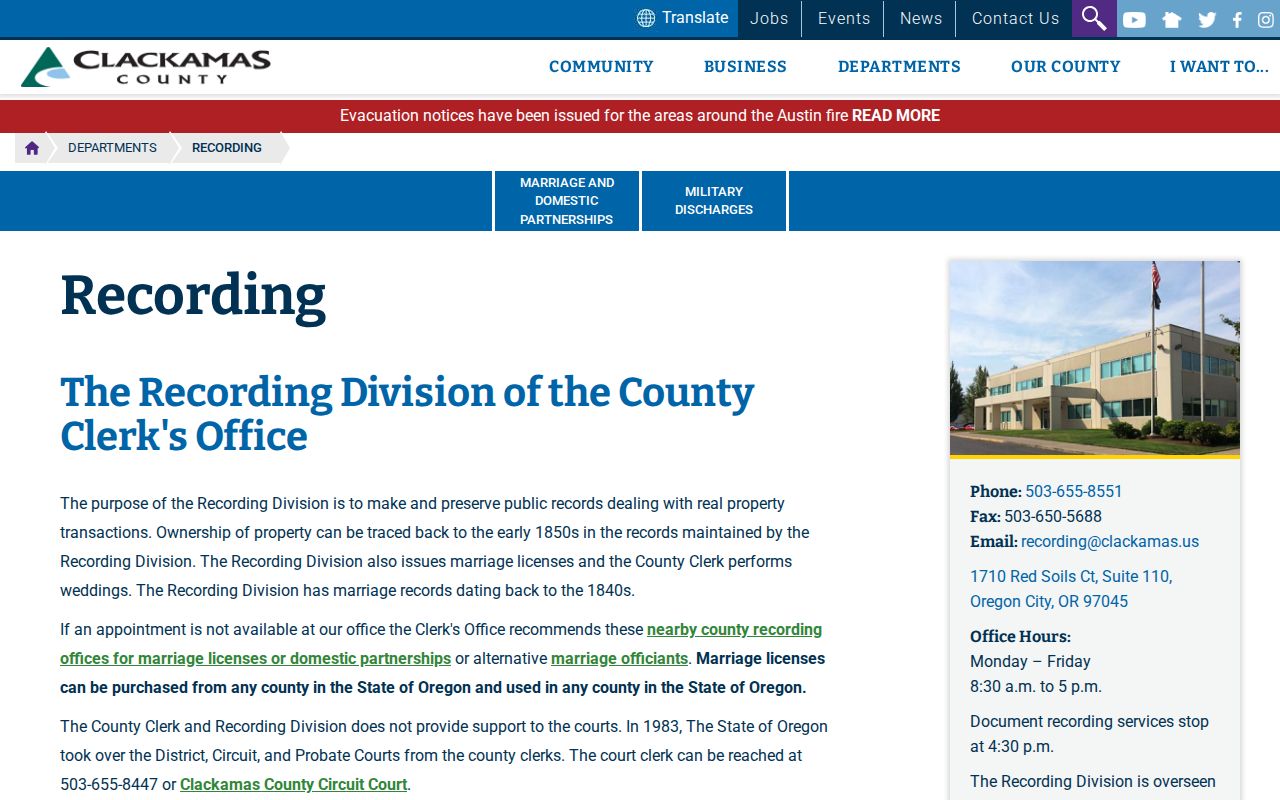
Its counter and copying route reaches records that should not be reduced to an unsupported claim about a remote deed search.
Lake Oswego Past Residents Name Search
Use Oswego, Lake Grove, and Lake Oswego as parallel search terms. The City’s Brief History explains that Oswego incorporated in 1910 and that Lake Grove's 1960 annexation prompted the Lake Oswego name change. An old deed, newspaper item, voter register, map, or directory can be filed under a former city name even when the present address uses Lake Oswego.
Period neighborhood names matter too. First Addition, Lake View Villas, Lakewood, Forest Hills, and Oswego Heights may point to the map or development context needed to identify the right parcel. A three-name search is not a substitute for the legal description, but it can reveal the period trail that a modern address search misses.
Lake Oswego Previous Residents Map Bridge
The Lake Oswego Sanborn Maps collection includes 1927 Oswego pages and a 14-page set. A Sanborn sheet can help compare a period street label, building footprint, and neighborhood context before a directory or deed address is matched to a current parcel. The City states that these maps are informational and not a legal survey.
First Addition maps from 1909, 1930, and 1947, Chamber maps from 1959, 1960, 1964, 1967-1970, 1973, and 1975-1977, and other historic maps can be used as date-specific address bridges. Pair the map's edition year and period city name with the deed's legal description. A visual match alone is not enough to establish a boundary or a transfer.
The City's 1927 Oswego Sanborn collection provides the period map source.
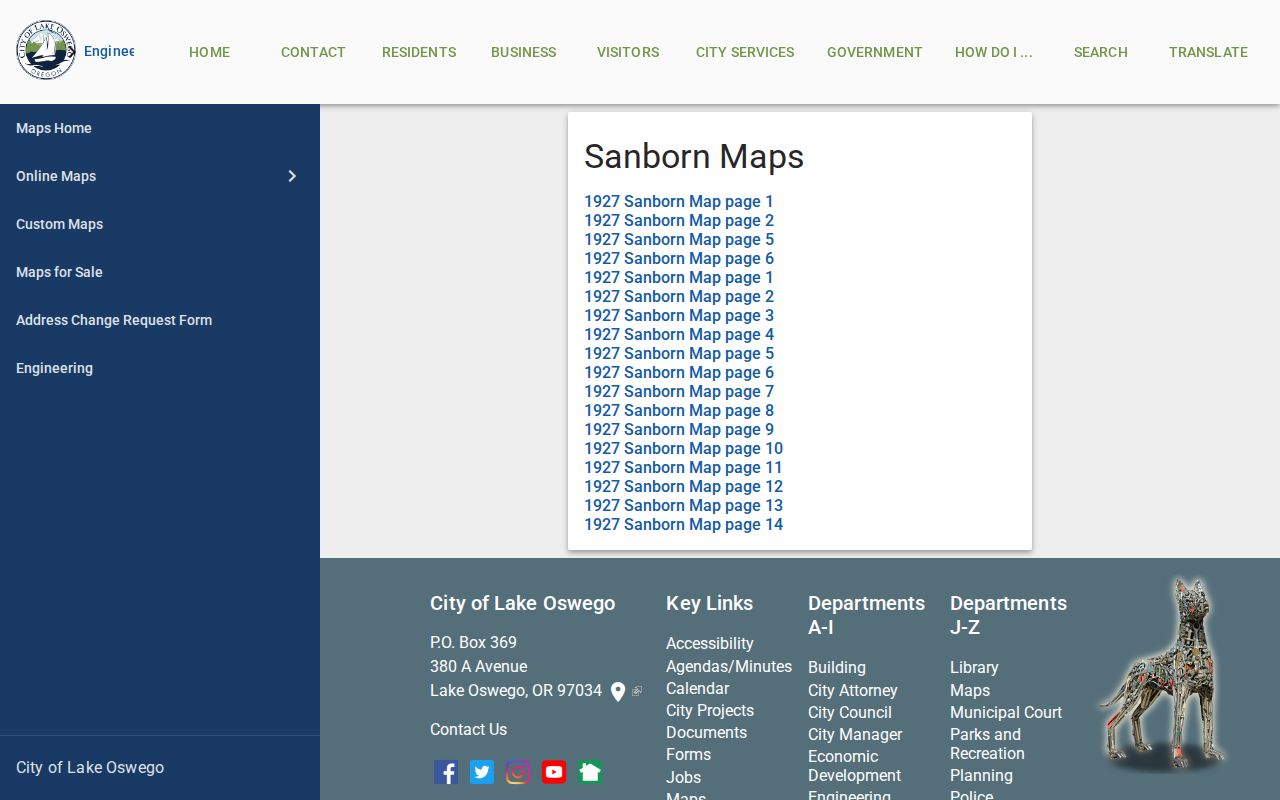
Use the map to reconcile a historic location, then return to the legal description and recorded documents for the actual land-record connection.
Lake Oswego Past Residents Library Files
The Library's History File, Newspapers, & Original Documents route is a useful in-person bridge when the deed chain leaves an address or surname question unresolved. It describes clippings, documents, and ephemera in locked file cabinets, an Original Documents archive with more than 100 files in a closed room with librarian-assisted access, and research material connected with the Ann Fulton Archive. Bring the modern address, variant names, approximate dates, and nearby landmarks.
Ask Library staff for the confirmed 1947-1948 Polk directory for Lake Oswego and Lake Grove, the 1951 special telephone directory, reverse or criss-cross directories if a relevant edition is held, historical map indexes, yearbooks, and newspaper material. The exact local run beyond the verified Polk volume must be confirmed from the catalog or shelf. This keeps a past-residents search grounded in the edition that actually exists.
The Library history-file and original-documents page describes this assisted-access route.
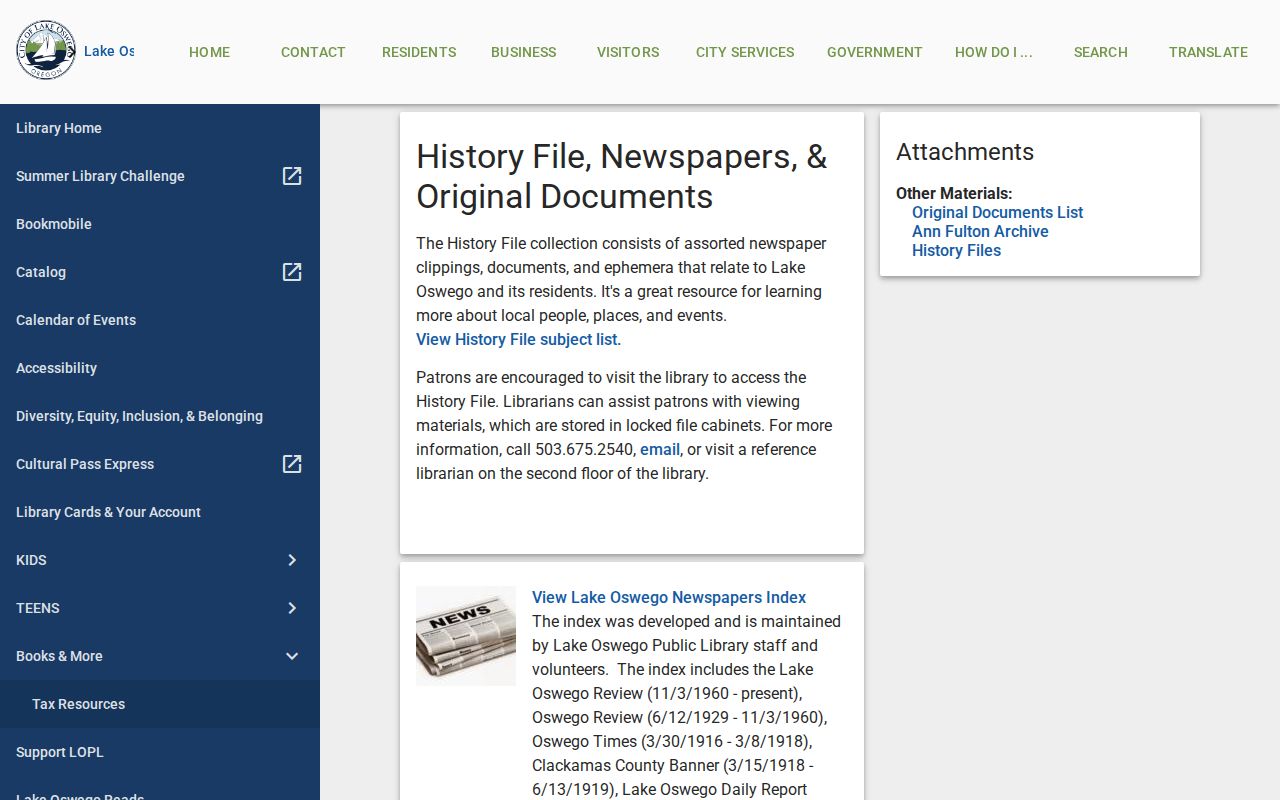
These local files can add a dated clipping, map, or original document to a parcel history, but they do not turn a narrow artifact into a complete list of occupants.
Lake Oswego Past Residents Permit Clues
A permit can date construction, alteration, inspection, or final approval. It may name an applicant or project contact, which is useful context for an address timeline but not proof of a resident. The City directs historic searches to Oregon Accela Building. For older Lake Oswego permit research, set the start year to 1900, enter the complete street number and only the first three letters of the street name, omit directional prefixes, and select Lake Oswego.
The City says that plans from before 1985 are not maintained. If the online search does not surface a needed historical file, use Lake Oswego's public-records request route for an existing, identified permit, inspection log, certificate of occupancy, enforcement result, or planning record. Name the address, approximate date range, and record category. The City holds records only for addresses inside City limits; deeds, assessment records, and unincorporated mailing addresses belong with the County or state custodian.
The Lake Oswego permit-search screen is the official starting point for the historic address syntax.
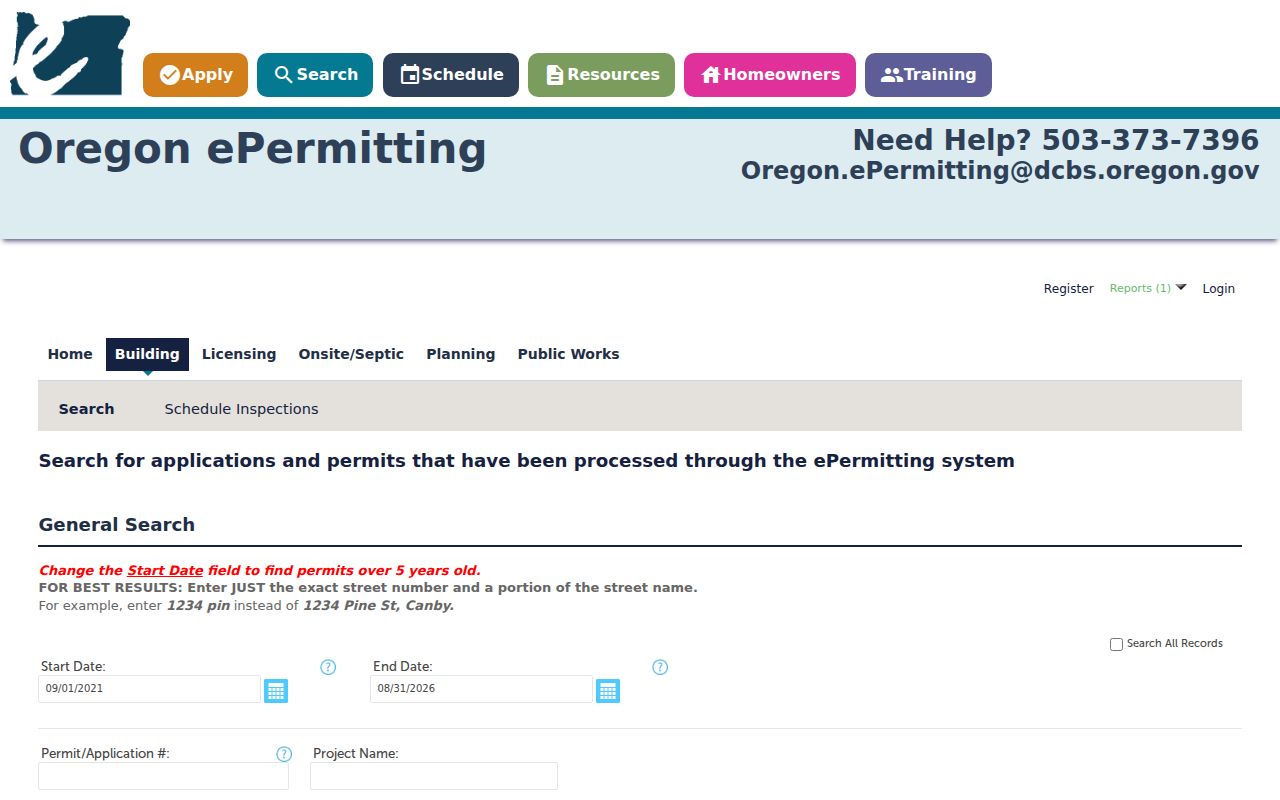
A permit date helps set a construction or alteration timeline. It should not be converted into an assumed move-in date.
Lake Oswego Past Residents Census Trail
Ownership and residence are different historical questions. A city or reverse directory can place a publisher-listed name at an address for one edition, while a released federal census gives a household snapshot for its enumeration date. The Lake Oswego city directories collection is the appropriate place to verify shelves, editions, and entry conventions before a past-residents trail relies on a listing.
Use a simple date flow: directory or telephone listing, then a released census near the period, then newspaper, obituary, cemetery, probate, or deed material to test an arrival, departure, death, or transfer. The Library's local newspaper sequence includes Oswego Times, Western Clackamas Review, Oswego Review, and Lake Oswego Review across their documented title runs. A missing listing can reflect a move, a new surname, a rural route, an unlisted household, or an index change.
- Record the street form and city-name variant used by the dated directory or telephone source.
- Match that date with the nearest released census rather than assuming every decade is available.
- Compare names, ages, relationships, and place carefully, then retain conflicts instead of merging people with similar names.
- Use an obituary, cemetery record, probate file, or deed only to corroborate the specific life or property event under review.
Note: Census and directory evidence can narrow a date range, but neither source proves every person who stayed at an address.
Lake Oswego Lawful House History
House-history research is strongest when it remains tied to an address, a dated record, and a clear question. Preserve distinctions between a property owner, taxpayer, tax-mail recipient, listed voter, permit applicant, and household resident. Those roles can overlap, but none is a complete account of who lived at a property. When the record is unclear, ask the custodian for the relevant existing document rather than filling the gap with an assumption.
Lawful use. Use Lake Oswego previous-resident records for family history, property history, estate questions, and personal research. Do not use historical details to track, threaten, harass, or harm any living person.
Oregon's public-records route applies to nonexempt existing records and can include exemptions or redactions. A targeted request identifies the address, time period, department, and specific document sought, which helps the custodian determine whether the City or County is the right holder.